
7 Reasons This Folding Saw Stand Makes Long Cuts Steadier, Setup Faster and Hauling Easier — and Gets Your Saw Off the Floor for Good
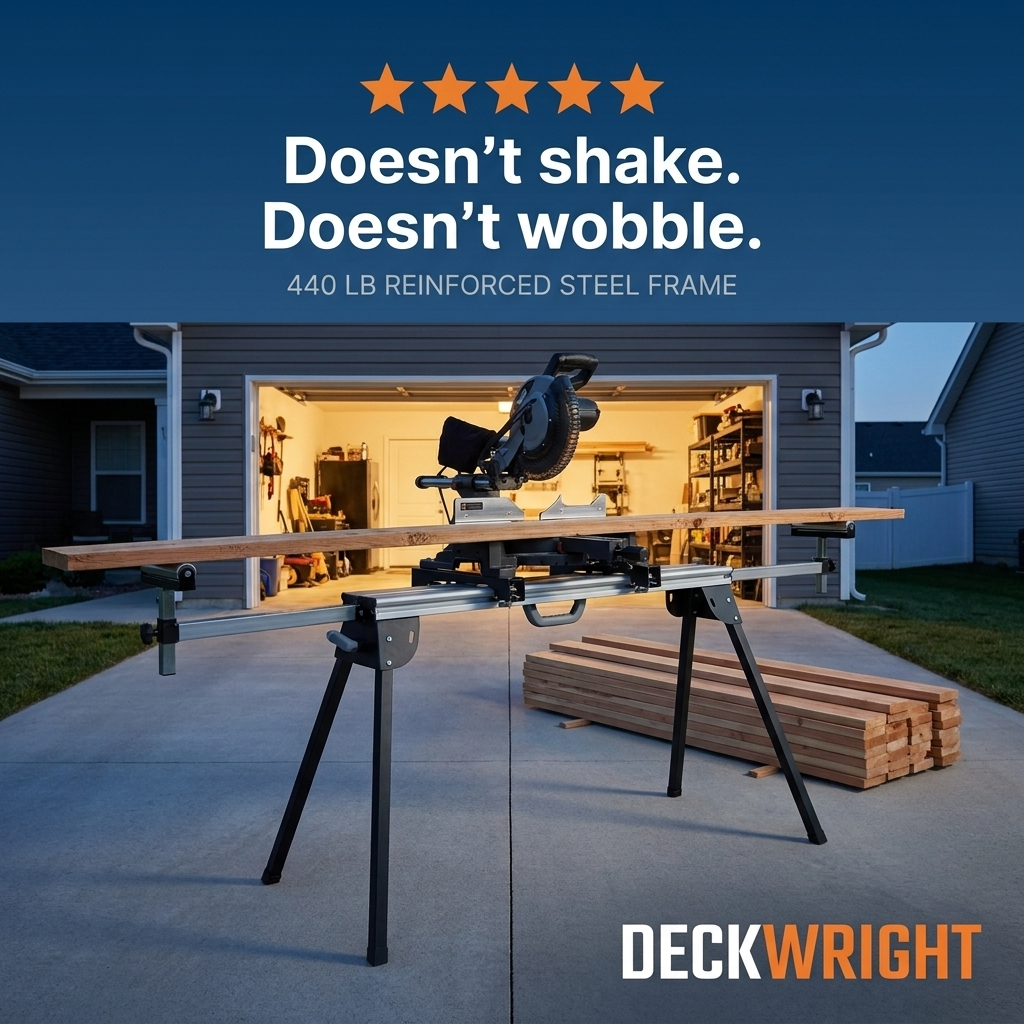
If you’ve ever screwed a sheet of plywood to the bottom of your saw… knelt on a cold garage floor to square up a piece of casing… or watched two tired sawhorses walk apart in the middle of a cut — the saw was never the problem. What it was sitting on was. DeckWright is the thing that should have been under it: a 440 lb anti-rust steel beam on four folding legs, quick-release brackets that take your saw in seconds without a tool, and rails that slide out to 76-4/5" so a 10-foot board rides on rollers instead of hanging off the end. It weighs 27 lbs and closes to 36-4/5" — garage wall, truck bed, back seat.
It Doesn’t Move When the Blade Drops
A stand isn’t a table. What you’re actually buying is the absence of movement while a spinning blade comes down into your material. Every bit of wobble in the base shows up in the cut — a gap in the miter, a blade that wants to bind, stock creeping under your hand.
DeckWright is a single steel beam rated to 440 lbs, carried on four legs that splay outward and lock. The saw sits at 31-9/10" — working height, not floor height — and stays where you put it.
Quotes on this page are verbatim from verified-purchase reviews of compact folding miter saw stands in this category — not reviews of DeckWright.
It Ends the Sawhorse-and-Plywood Setup
Almost everyone who buys a stand is escaping the same thing: two beat-up horses with a sheet of ply across them, a saw bolted to the bottom of it, and a workstation that takes two people to load into the truck. Or the shop floor. Or a tailgate.
That setup isn’t just slow — it’s the reason your knees hurt and your miters don’t close. DeckWright replaces the whole arrangement with one piece of steel that unfolds by hand and carries itself.
Long Stock Rides on Rollers Instead of Hanging Off the End
This is the moment people actually go buy a stand: a piece of trim dangling off both sides, the far end dropping, and the cut pulling out of square because the board is doing the deciding.
DeckWright’s rails slide out to 76-4/5" and hold material up to 10 feet long. Two roller work supports carry the weight so flooring, casing and fence pickets feed instead of drag, and the flip-up end stops set your length so cut nine matches cut one.
It Goes From Packed to Working in Seconds
A stand that takes five minutes and a socket set gets left in the van. DeckWright’s legs fold out and lock, the knobs turn by hand, and after the first assembly there is no tool to lose on the jobsite — the wrench you need for that first assembly ships in the box.
End of the day it goes the other way just as fast: fold the legs, slide the rails in, pick it up.
One Person Puts the Saw On — and Takes It Off
Two quick-release brackets mount to your saw’s base on a 16" bolt spread and stay there. After that the saw drops onto the beam and locks in one motion, and comes off the same way — no bolts, no second pair of hands, no lifting the whole rig because the saw is screwed to it.
That’s the difference between a stand you carry to the job and a stand that becomes a permanent fixture in the garage.
27 Pounds, One Hand, and It Fits Where You Keep It
The two things that sink a saw stand are weight and length. A stand you dread carrying stays in the shop, and a six-footer doesn’t go in a short-bed truck or hang on a garage wall.
DeckWright is 27 lbs with a carry handle and closes to 36-4/5". Not everyone needs to cut 16-foot 2x6s — most people are cutting trim, flooring, pickets and baseboard, and want the stand out of the way the second they’re done.
It’s Three Moves, Start to Finish
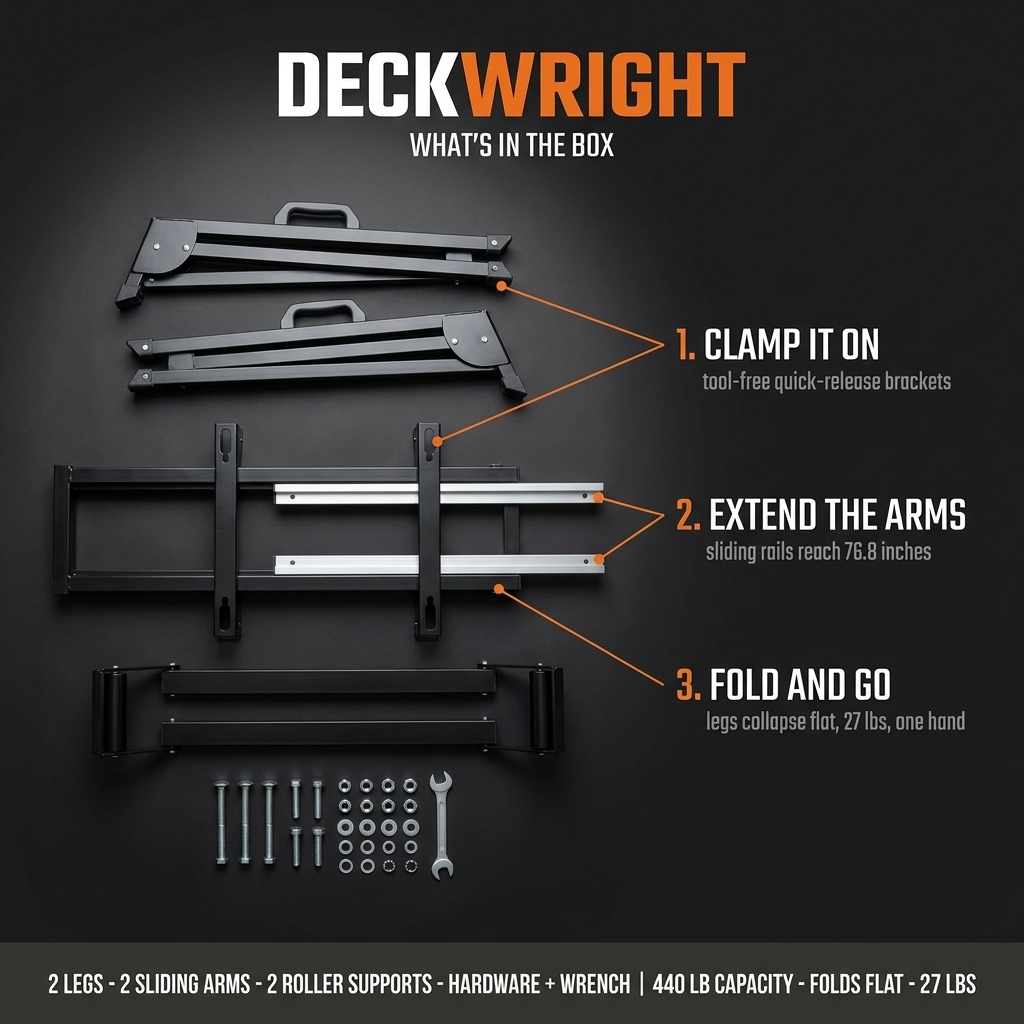
Bolt the two quick-release brackets to your saw once, then drop the saw onto the beam. It locks in a single motion — no tools, one person.
Slide the rails out to as much of the 76-4/5" as your stock needs, set the roller supports, and flip up an end stop for repeat cuts at one length.
Rails in, legs up, saw off if you want it off. 27 lbs on a carry handle, 36-4/5" closed — wall hook, truck bed or trunk.
Why DeckWright Beats What’s Under Your Saw Now
The saw is precise to a fraction of a degree. Then it gets set on two horses and a board. Everything you lose, you lose underneath it.
| DeckWright Portable Saw Stand | Sawhorses, plywood or a DIY bench | |
|---|---|---|
| Stability under the cut | 440 lb steel beam, four locking legs | Horses walk apart mid-cut |
| Long stock | 76-4/5" rails, rollers, end stops | Material dangles off both sides |
| Repeat cuts | Flip-up stops set the length | Measure and mark every piece |
| Mounting the saw | Quick-release brackets, one person | Screwed to plywood, two-man lift |
| Setup | Unfolds by hand in seconds | A Saturday and half a sheet of ply |
| Working height | 31-9/10" — off the floor, off your knees | Floor, tailgate or a rolling cart |
| Moving and storing it | 27 lb, folds to 36-4/5" | Takes a bay, doesn’t fold |
| Weather | Anti-rust coated steel frame | Swells, warps, splits |
What people say about getting the saw off the floor
The saw was never the problem. What it was sitting on was.
440 lbs of hold, 76-4/5" of reach, 27 lbs to carry, and no tool needed to set any of it up. $199.95 once — $200 off while the launch price holds, with 30 days to change your mind.
Get DeckWright — Save $200 →